Recently my dearest friend pointed out the ills of eating non-vegetarian food. His point was simple: look at any of the carnivores, many of them are highly aggressive to the extent of being ferocious. On the other hand, herbivores are generally gentle. Now there could be exceptions, but he pointed out the example of the elephant, benign despite being the largest land animal.
I looked around for further explanation. A theory says that certain chemicals produced at the point of slaughter remain in the muscles which are passed on to us when we eat the meat. These chemicals are produced when the animal goes through severe pain and the resulting emotional upheaval at the time of slaughter. And the chemicals lead to a more aggressive behavior among the eaters (http://www.celestialhealing.net/mentalveg2.htm).
I can think of two ways to escape this. Avoid eating non-vegetarian food or devise ways of killing animals without causing pain. I believe there are already numerous ways to do the latter, but the mode of slaughter in most of the places (especially in the less developed areas) remains painful.
Now the bigger question: is killing animals fair, assuming the process does not cause any pain. Here are some thoughts:
One could very well argue that the universe follows a natural order. Living things are born to die. Some die early, some late. Predator and prey have been inherent to the natural order from time immemorial, or at least based on what we know. In a way, the equation plays an important role in controlling the population of each type (remember the economic model - predator-prey - dealing with populations of rabbits and foxes, based on Lotka Volterra equations). The context is clear. The natural order plays a critical role in balancing the world.
And we know that human beings and not necessarily at the top of this natural order. At least there were not as powerful as some of the wild animals before they evolved their order of cognition to a different level. Science fictions proliferate with imaginary powerful creatures that can spell doom on humans. In a way, things add up, form a circle. Killing animals and eating their meat does not sound unnatural.
To be on the safer side and to stop the cruelty in a slaughter house I advocate the immediate adoption of painless ways to kill the animals. As an aside I remember Peter Diamandis mentioning in the podcast with Tim Ferris about cell culture which can lead to the production of meat without killing animals. The concept sounds futuristic but does not look too far away considering the range of artificial environments we deal with. So maybe, we have a ticket waiting for remorseless cannibalism.
Tuesday, February 28, 2017

Sunday, February 19, 2017
The Couple in the Train
The cabin in the train was fairly full by the time they came in. They looked husband and wife and there was little conspicuous about either. The guy was lean and upright, had a stubble. He wore a white shirt. His demeanor was more on the rustic side. She was short and plump, wore a long black robe that highlighted her religion. He looked around 40 and she must have been about five years younger (assumption by convention). The only time I conversed with them was through an apology when I mistook their bottled water for mine. He shrugged it off with a friendly smile. I noticed them having dinner soon after, from the same box, not conversing with each other during the time.
The train had three berths on each side to sleep in, one above the other. They had one ticket on the top, and the other middle. Soon after, she ventured to get on the middle berth; she could not, her bulk restraining her. He quickly went close to her, held her with both hands and helped her mount the berth. It was a natural thing that any guy would do for his girl, but the expressions on their faces were priceless. He had the calmest expression, his attention solely on her, oblivious to everything else in the world. She had a demure smile, looking around consciously, the beautiful look of uneasy coyness.
I am not sure others in the cabin noticed, but I felt the unhindered love flowing between them. It was beautiful and uncommon 'in these days of degenerating decency' (courtesy a famous regional movie dialogue). It was a minor moment to treasure and I wish them lots of love all their life.
The train had three berths on each side to sleep in, one above the other. They had one ticket on the top, and the other middle. Soon after, she ventured to get on the middle berth; she could not, her bulk restraining her. He quickly went close to her, held her with both hands and helped her mount the berth. It was a natural thing that any guy would do for his girl, but the expressions on their faces were priceless. He had the calmest expression, his attention solely on her, oblivious to everything else in the world. She had a demure smile, looking around consciously, the beautiful look of uneasy coyness.
I am not sure others in the cabin noticed, but I felt the unhindered love flowing between them. It was beautiful and uncommon 'in these days of degenerating decency' (courtesy a famous regional movie dialogue). It was a minor moment to treasure and I wish them lots of love all their life.
Sunday, February 12, 2017
How do you like your son to be?
In one of his podcasts, Sadhguru Jaggi Vasudev talks about having friends. He has an interesting suggestion to test whether we are eligible to have friends. Stay alone for a whole day, do not sleep, do not read, just stay alone and watch the mind. At the end of the day, ask oneself whether it was good company. For instance, the simple "Did I like my thoughts? or Am I a good person?". He says the answers are direct clues on whether other people would like to be around us.
Connected to the above, I remember a forward saying we should not do anything that we do not wish our kids to do. It is probably a good signboard for life. Before any action or even thought, it would be appropriate to evaluate whether one would approve of his son or daughter doing the same or thinking along the same lines in a similar situation in life. And let that be anything, from procrastination to thinking ill of others to an unwarranted exhibition of anger at the weak.
Connected to the above, I remember a forward saying we should not do anything that we do not wish our kids to do. It is probably a good signboard for life. Before any action or even thought, it would be appropriate to evaluate whether one would approve of his son or daughter doing the same or thinking along the same lines in a similar situation in life. And let that be anything, from procrastination to thinking ill of others to an unwarranted exhibition of anger at the weak.
Tuesday, February 7, 2017
Risk Vs Uncertainty
In the book, 'The Signal and the Noise' Nate Silver talks about the difference between risk and uncertainty. He talks about this in the context of the American financial crisis in 2008. Specifically, collateralized debt obligation (CDO) (a stacked instrument combining mortgages) defaulted en masse leading to the meltdown. Before the event, the credit rating agencies were able to estimate the risks associated with CDOs, but they were blinded to the uncertainty around it. Risks were fairly straightforward, it was about the possibility of default for an individual instrument. Uncertainty refers to the cataclysmic domino effect that led to the mass default. In other words, credit rating agencies failed to understand the strong connections between various events that precipitated the formation of the deadly ripple.
I think the risk Vs uncertainty theme is not only relevant in the financial world but also in a much wider context or the life itself. Translating into the real world, risks are what we foresee or envision, uncertainty remains uncertain. Risks are usually uni-dimensional or at times may have a few dimensions, uncertainties are always many-dimensional. Similar to how we struggle to visualize anything more than 3-dimensional, we are unable to even gauge the gravity of the uncertainties in life. This is a humbling thought in many ways. Considering life is full of unpredictabilities of varying degrees, it is foolish to have attachments to worldly beings and things. To concretize the aspect, I would think of it as follows: I could be dependent on anyone or anything at any time due to the multitudinous possibilities. My feelings (in particular negative) about anyone is irrelevant. The thought tells me to place each and every happening in context and react with complete consciousness. It also emphasizes the significance of the little blessings (I mean even the minutest, a baby's smile, for instance, is huge).
I think the risk Vs uncertainty theme is not only relevant in the financial world but also in a much wider context or the life itself. Translating into the real world, risks are what we foresee or envision, uncertainty remains uncertain. Risks are usually uni-dimensional or at times may have a few dimensions, uncertainties are always many-dimensional. Similar to how we struggle to visualize anything more than 3-dimensional, we are unable to even gauge the gravity of the uncertainties in life. This is a humbling thought in many ways. Considering life is full of unpredictabilities of varying degrees, it is foolish to have attachments to worldly beings and things. To concretize the aspect, I would think of it as follows: I could be dependent on anyone or anything at any time due to the multitudinous possibilities. My feelings (in particular negative) about anyone is irrelevant. The thought tells me to place each and every happening in context and react with complete consciousness. It also emphasizes the significance of the little blessings (I mean even the minutest, a baby's smile, for instance, is huge).
Monday, February 6, 2017
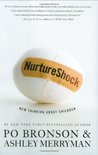 NurtureShock: New Thinking About Children by Po Bronson
My rating: 3 of 5 stars
Pro Bronson's book takes up a string of relevant issues around nurture and does an objective analysis of each one of those. The author has chosen interesting topics to deal with and he meticulously goes into the details. The analysis is strictly research-based with a conscious effort to minimize subjectivity. It is by no means a book of prescriptions for parents; rather it is an in-depth dissection of various issues that educators and neuroscientists deal with.
The most interesting among the issues taken up are the one about a unique curriculum used in the US called 'Tools of the Mind' (http://thelearnersbreath.blogspot.in/...), a few eye-opening details on why children lie and how parents abet the lying process by being clumsy about their own utterances, and a few corrective ideas about praise, especially the unworthy sort of praise showered on children.
On the flipside, while dealing with each idea, the author quotes a plethora of research, which leads to the reader wondering sometimes on what the conclusion is all about. In a way, the objectivity at times hinders seamless communication. The reader does not take home any major eye-openers, though I should say, that may not have been the objective of the book. I would not say It is a must read for parents, but it is a good book to read and would be extremely useful for an educator.
View all my reviews
Tuesday, January 31, 2017
Facing the Robotic Era
Speculations are rife on the human state in an impending robot era. In one of Tim Ferris podcasts, the guest mentioned that robots are likely to take over all the tasks that need efficiency. Most of the routine tasks, for instance, data entry or cleaning, are better done efficiently than in parallel with daydreaming.
The guest also mentions that humans would be in charge of the relatively inefficient tasks - science research, art, relationships, etc. For instance, science research is inherently inefficient as significant breakthroughs are made after years of repeated trials. One starts with a hypothesis, makes a few assumptions, collects data, tests the hypothesis, alters it depending on the results and repeats the process.
I thought this is a very interesting thought. Lives will change and that too dramatically. How do we get kids ready for this? Here are some humble thoughts, which would keep evolving.
1. Joblessness will become an integral part of life, at least for a significant subset. Also, a job may not entail the 9 to 5 routine. Naval Ravikant mentions that people should learn to work in a boom-bust fashion. This means many would face boredom as a challenge. Children should have enough practice to get around this. They should be bored and should find ways to fill their time with interesting activities. 'Avoid getting bored' is the first of the seven habits in the book 'The 7 habits of happy kids' by Sean Covey (yes, right guess, he is the son of Stephen Covey).
2. As mentioned earlier, managing relationships would become all the more important. It probably augurs well for kids to play among themselves for a larger period of time rather than sit at home watching TV of revising what is taught at school.
3. Linked to the above point, empathy will be of critical value. We would be in a polarized world with people who have work and who have no work or patchy work. To think from another person's perspective is one of the biggest challenges humans face today. Troubles are on unless we succeed in teaching kids (at least some of them) to be empathetic. It's unclear how to train on this, but that's a different topic of interest.
4. Creativity will rule the roost. Anything that's not creative will go to the machines. Let's teach kids to think and be creative. Information and memory will be redundant.
5-10. Who knows?
Monday, January 30, 2017
We the people of ...
A conversation between A* and his teacher on Republic day. This is after one of the kids talked about how the Preamble to the Constitution starts:
the other student: We the people of India
A*: We the people of the earth
teacher (hearing A*): We the people of the world
A*: We the people of the universe
teacher: We the people of the multiverse
A* (after thinking for five seconds): We the people of God!
I thought the conversation was quite relevant in the Trump era.
the other student: We the people of India
A*: We the people of the earth
teacher (hearing A*): We the people of the world
A*: We the people of the universe
teacher: We the people of the multiverse
A* (after thinking for five seconds): We the people of God!
I thought the conversation was quite relevant in the Trump era.
Friday, January 27, 2017
Parent's Conundrum
A scenario: your 8-year old son mentions to you that his friends are playing some inappropriate games. He also mentions he did not want to join and so just came off. Now you have a strong enough intuition that this is true. Now the question is, how are you going to react?
Here is my take:
Ask your son to continue playing with his friends but avoid taking part in the dirty ones. This is assuming you are fairly confident about your son's discriminatory abilities.
All good. What about your responsibility towards the parents of the other kids? I think you should definitely mention the dirty games to their parents so that they would be able to correct the kids. Now there is the likelihood of those parents disbelieving you. There is the likelihood of them accusing your child of lying. Never mind, how does it matter? Let them react; you have done your part.
But the offshoot of the whole episode is your son possibly losing the friends. Even if the parents believe you, in all probability, they would question their kids and say enough for the kids to realize that your son spilled the beans. And this is where things break up. You do not want your son to suffer.
What is the way out now? I talked about this conundrum to a more enlightened friend. She had a very clear advice. At a neutral instance raise this with your son and talk to him about your responsibility towards the other parents. Ask him for an opinion on what you should do. Make him feel empowered. It is also a great opportunity to point out the value of righteousness. If you go ahead and talk to the other parents after getting a buy-in from your son, you are in a much better position to avoid your son's heartbreaks even if he loses his friends. Why? Your son will for sure anticipate that. Kids are smarter than we think they are.
Tuesday, January 24, 2017
There is Nothing on the Other Side of Fear
I heard someone saying on a podcast that there is nothing on the other side of fear. As a person who gets bothered about the mundane and the minor, the statement struck me. It also goes along with the fact that we are much smaller than a germ in this gigantic universe. I remember Abel saying that the universe has been around for billions of years and in that context, he was too young (He is too young in any context). Naval Ravikant in his podcast with Tim Ferris says that the universe may go on for billions of more years and our coming and going make no difference.
The idea is more than obvious, but I thought it is worth reminding myself. Every breath is an opportunity. There is nothing that can be negative. There is nothing on the other side of fear.
The idea is more than obvious, but I thought it is worth reminding myself. Every breath is an opportunity. There is nothing that can be negative. There is nothing on the other side of fear.
Monday, January 23, 2017
The Tools System
I came across a schooling system called Tools of the Mind in the book 'Nurtureshock: Why everything we thought about children is wrong' by Pro Bronson and Ashley Merryman.
Tools of the Mind or the Tools system was designed by neuroscientists. The curriculum mainly focusses on developing two important skills:
1. Children should be able to maintain undistracted focus on the task at hand
2. Children should have enough practice in higher order thinking from a very early age
The system is introduced at the kindergarten level. Most of the learning happens through play-acting. For instance, while learning about a hospital, children play out the parts of various associated characters. Significantly, each child puts down her part of the play including the minutest details. Teachers would help them out in creating the script. The details would include drawings and words. Later while acting, children are encouraged to meticulously follow the script. Distractions are weeded out by reminding them of what is in the script and what is not. The whole exercise provides them excellent practice to shut out distractions and have a single-minded focus.
Scripting out details of their part of the play also helps them develop planning skills. This stimulates the part of the brain responsible for executive functions. The part of the brain that deals with executive functions and self-evaluation are critical to the child's ability to assimilate and concretize advanced and abstract topics.
Likewise the Tools system also has the exercise of grouping children into pairs and making one of them narrate a story. The other child is mandated to listen and comment on the story. This develops the child's evaluation skills, which gradually help make judgments on own work.
Many components of the Tools system could be relevant in countries like India. It may not be easy for schools to change systems, but they could try and add some parts of the system, at least at the very junior levels. At the same time, parents can adopt these ideas to have novel learning sessions with kids. Simple exercises can be designed to encourage the child to practice objective evaluation.
Tools of the Mind or the Tools system was designed by neuroscientists. The curriculum mainly focusses on developing two important skills:
1. Children should be able to maintain undistracted focus on the task at hand
2. Children should have enough practice in higher order thinking from a very early age
The system is introduced at the kindergarten level. Most of the learning happens through play-acting. For instance, while learning about a hospital, children play out the parts of various associated characters. Significantly, each child puts down her part of the play including the minutest details. Teachers would help them out in creating the script. The details would include drawings and words. Later while acting, children are encouraged to meticulously follow the script. Distractions are weeded out by reminding them of what is in the script and what is not. The whole exercise provides them excellent practice to shut out distractions and have a single-minded focus.
Scripting out details of their part of the play also helps them develop planning skills. This stimulates the part of the brain responsible for executive functions. The part of the brain that deals with executive functions and self-evaluation are critical to the child's ability to assimilate and concretize advanced and abstract topics.
Likewise the Tools system also has the exercise of grouping children into pairs and making one of them narrate a story. The other child is mandated to listen and comment on the story. This develops the child's evaluation skills, which gradually help make judgments on own work.
Many components of the Tools system could be relevant in countries like India. It may not be easy for schools to change systems, but they could try and add some parts of the system, at least at the very junior levels. At the same time, parents can adopt these ideas to have novel learning sessions with kids. Simple exercises can be designed to encourage the child to practice objective evaluation.
Subscribe to:
Comments (Atom)